
Technology Summary
Electrodeionisation (EDI) technology removes residual salts and ionisable aqueous species – such as carbon dioxide, silica, ammonia and boron – from water to produce ultra-pure (polished) water. The EDI systems operate chemical-free, achieve 97% water recovery, and consume only electricity.

Aqueous Species Removal

Residual Salts Removal
The system consists of alternating cation and anion exchange membranes through which the ions in the water migrate. The space between the membranes is filled with ion exchange resin. The resin is continuously regenerated and thus the ultra-pure water is produced continuously.
Feed water to the EDI system is typically permeate from an RO system to minimise scaling, organic fouling, particulate and colloidal blocking and chemical cleaning. The EDI system is typically used to replace mixed bed ion exchange polishers.
Standard skids combining RO and EDI treatment units are also available.
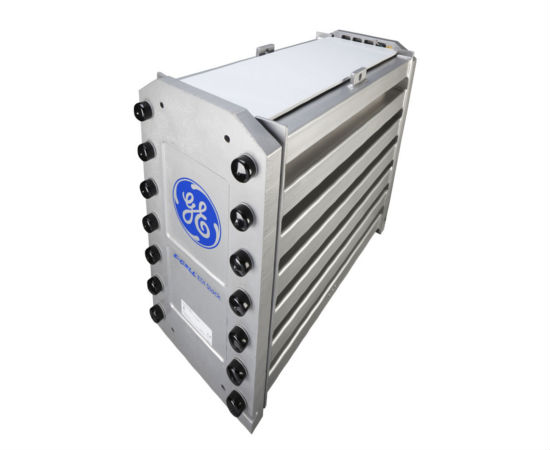
Electrodeionization EDI Cell
Technology Benefits
The main benefits of EDI technology are:
• It produces a continuous stream of ultra-pure water with no need for regeneration cycles, etc.,
• No need for regeneration chemicals,
• No regeneration effluent disposal problems,
• No stack bolt tightening,
• No salt bridging,
• Guaranteed not to leak,
• No concentrate recirculation required,
• No Brine injection,
• Improved stack energy efficiency,
• Improved hardness tolerance (HH series 2.5ppm ; 3X series 1 ppm),
• Improved silica tolerance – 1 ppm,
• Less susceptible to thermal damage,
• Lower system operating power ~ 0.15-0.45 kWhr/m3.
Applications
Typical applications of EDI technology include:
• High pressure boiler make-up water,
• NOx control,
• Micro-electronics fabrication rinse water,
• Pharmaceutical production,
• Food and beverage applications.