
Technology Summary
Cavitation is an operating mode which is traditionally associated with incorrect pump sizing and equipment damage. Ultrasound cavitation is however, a technology with growing applications in various processing and manufacturing applications. This technology received a bad name historically by the incorrect application by certain competitors. Our German partner entered the market later with a commercially-ready product. They do indeed have many proven applications in more than 80 facilities.
Ultrasound is defined as sound in the range of 20 kHz to 10 MHz. However the lower end of the range (20 – 40 kHz) is utilised to achieve cavitation. Localised the pressure falls below the evaporation pressure of water, resulting in the explosive formation of small bubbles. This results in strong mechanical shear forces that can destroy robust surfaces. The equipment consists of a number of probes producing the ultrasound in a plug flow reactor configuration.
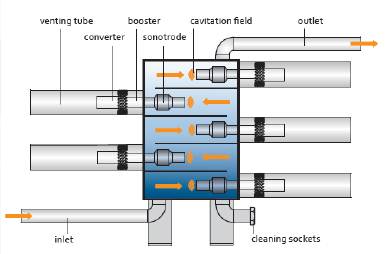
Schematic Diagram
The ultrasound first decomposes the agglomerations at low energy followed by further sonification which causes cell lysis (breaks cell walls). This releases the cell content, making it easily available for degradation. In addition it releases enzymes from cells (usually destroyed where heating processes are used) which stimulates microbial activity. The result is better digester performance and increased biogas production.
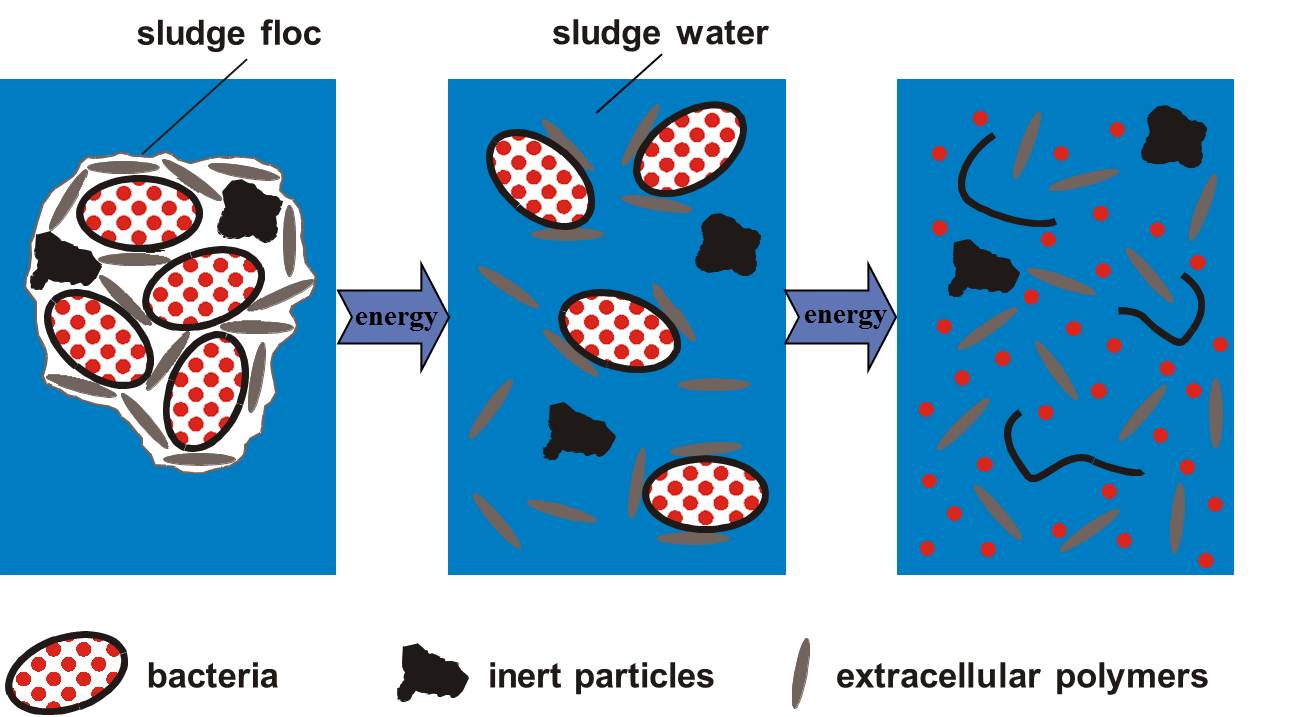
Diagram – The Destruction of Biosolids
Technology Benefits
By retrofitting this technology on an existing digester, biogas production is significantly increased (up to 20%), the biogas methane content is improved and the residual sludge production is reduced (15-20%). Another significant advantage is that the digestate viscosity is reduced, thus reducing the electricity consumption of the digester system. This system is therefore energy positive in its application. In essence, the conversion from mass to energy is enhanced.
By including it in the development of a new digester system, the enhanced digestion achieved results in a decreased retention time required in the digester. This in turn results in the need for a smaller digester and thus reduced construction cost.
Applications
The technology can be utilised in various ways to improve either the aerobic or anaerobic sewage treatment processes e.g.:
• Bulking Sludge treatment,
• Biological Nutrient Removal enhancement by releasing an internal carbon source,
• Intensification of aerobic and anaerobic sludge stabilisation,
• Combating Foam in the anaerobic digester and
• Improve dewatering.
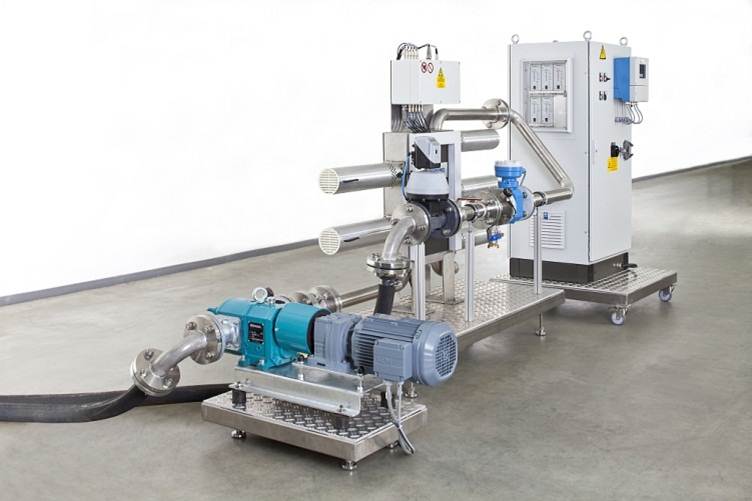
Typical Unit
Case Study
At Bamberg WWTP in Germany, the Ultrawaves High Power US technology has been in use since 2004 to enhance the anaerobic digester performance. Using a Combined Heat and Power Station, Bamberg WWTP is able to produce more electrical energy by “own” sewage sludge digestion (without feeding any co-substrate to the digester) than is consumed by the WWTP. Therefore Bamberg WWTP is the first WWTP in Germany which is operating energy autarkic.